
Best Keyword Research Tools for SEO (Free & Paid)
When I started working on SEO, keyword research felt confusing and time-consuming. Over the years, I realised that choosing the best keyword research tools for SEO makes a huge difference in finding low-competition keywords and ranking content faster. In this blog, I’m sharing practical insights, real experiences, and honest reviews of free and paid keyword research tools that actually work for beginners and professionals.
Why Keyword Research Tools Are Important for SEO
Keyword research tools are not just for finding keywords. They help you understand what people are actually searching for, how competitive a keyword is, and whether it’s worth creating content for it.
From my experience, good keyword research helps you:
Avoid wasting time on impossible keywords
Find long-tail keywords that convert better
Understand search intent (informational vs commercial)
Analyse what competitors are ranking for
Build a realistic SEO strategy
Without proper keyword research, even well-written blogs struggle to rank.
Best Keyword Research Tools for SEO
Below are the tools I’ve personally used or tested, and where they actually make sense :
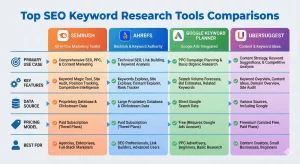
Google Keyword Planner – Free Keyword Research Tool for SEO Beginners
Best for: Beginners, local businesses, basic keyword ideas
Google Keyword Planner is usually the first tool people try, and for good reason, it’s free and backed by Google data.
What I like:
Reliable keyword suggestions
Useful for local keywords
No cost involved
Where it falls short:
Search volume is shown in ranges
Not built specifically for organic SEO
* I mostly use it to validate keyword ideas, not as my only research tool.
Ahrefs: Best for Competitive SEO Niches
Best for: SEO professionals, agencies, competitive industries
Ahrefs is the tool I rely on when I’m working in competitive niches. One thing I genuinely like is that its keyword difficulty score is based on backlink strength, not just random numbers.
What works well:
Accurate keyword difficulty
Excellent competitor keyword analysis
Strong backlink data
Honest drawback:
Expensive for beginners
Too advanced if you’re just starting
* If I were starting SEO today, I wouldn’t buy Ahrefs immediately. I’d first learn keyword intent using free tools.
SEMrush: Best All-in-One SEO Tool
Best for: Complete SEO campaigns, content planning
SEMrush is great when you want everything in one place — keyword research, content ideas, site audit, and tracking.
Why people like it:
Keyword gap analysis is very useful
Content optimisation tools
Good for planning blog calendars
Downside:
Can feel confusing initially
Pricing is still on the higher side
* SEMrush works best when you already understand basic SEO workflows.
Ubersuggest: Best for Beginners & Low Budget
Best for: Bloggers, freelancers, startups
Ubersuggest is one tool I often recommend to beginners because it’s simple and affordable.
Good points:
Easy interface
Budget-friendly pricing
Helpful keyword suggestions
Limitations:
Data depth is limited
Not ideal for highly competitive research
* For beginners, this tool is more than enough to start ranking small blogs.
Keywords Everywhere: Best Browser-Based Tool
Best for: Quick keyword checks
This is a Chrome extension I use when I want fast keyword data without opening dashboards.
Pros:
Shows volume directly on Google
Saves a lot of time
Very affordable
Cons:
Not suitable for deep competitor analysis
* Best used as a support tool, not your main research tool.
Free vs Paid Keyword Research Tools: Which One Should You Choose?
Free tools are perfect if:
You’re learning SEO
You’re working on a new website
Competition in your niche is low
Paid tools make sense when:
You’re targeting competitive keywords
You manage client projects
You need accurate competitor data
From my experience, combining free and paid tools gives the best results, especially in the beginning.
How to Get Ahrefs or SEMrush at a Lower Price (Legal Options)
Let’s be honest, not everyone can afford ₹8,000–₹12,000 per month for SEO tools, especially when you’re just learning. Many beginners and freelancers look for low-cost access options, and yes, some of them are useful if used wisely.
Group Buy SEO Tool Platforms (Shared Access)
Group-buy platforms offer shared access to premium SEO tools at a much lower cost.
Best for:
Students, beginners, practice learning
Pros:
Very low monthly price
Access to premium tools
Good for understanding keyword research
Cons (important):
Limited searches
Slower performance
Access can stop anytime
Not reliable for client work
* I’ve seen beginners learn a lot using group-buy tools, but I personally avoid them for serious projects.
SEO Tool Resellers & Communities
Some SEO communities provide shared dashboards or reseller access.
Pros:
Slightly more stable than group buys
Decent uptime
Cons:
Limited features
Restricted data
Free Trials & Official Free Tools (Safest Option)
If you want zero risk, use:
Ahrefs Webmaster Tools
SEMrush free version
Trial plans (when available)
* This is the safest way to test premium tools.
Important Note :
Low-cost access is okay for learning, but for long-term SEO and client projects, official plans are always more reliable
Which Keyword Research Tool Is Best for You?
| Your Situation | Recommended Tool |
|---|---|
| Beginner | Ubersuggest |
| Blogger | Keywords Everywhere |
| Local Business | Google Keyword Planner |
| SEO Agency | Ahrefs / SEMrush |
| Low Budget | Free tools + shared access |
Common Keyword Research Mistakes to Avoid
From what I’ve seen, these mistakes slow down SEO growth:
Targeting only high-volume keywords
Ignoring search intent
Not checking competitors
Depending on just one tool
Avoiding these alone can improve your rankings
Pro Tips from 20Clicks to Use Keyword Research Tools Effectively
Combine 2–3 tools instead of relying on one
Focus more on long-tail keywords
Manually check Google SERP before writing
Match content format with user intent
These small habits make a big difference.
Final Thoughts
The best keyword research tools for SEO are not about choosing the most expensive option. They’re about choosing tools that match your experience level, budget, and SEO goals.
If you’re a beginner, start simple. Learn intent first. Upgrade tools only when your SEO skills and projects grow.
Frequently Asked Questions
Which is the best keyword research tool for beginners?
Ubersuggest and Google Keyword Planner are ideal for beginners because they are simple and affordable.
Are free keyword research tools accurate?
They are accurate for direction, but paid tools provide deeper competition analysis.
Can I use Ahrefs or SEMrush at a low price?
Yes, shared access and free tools can be used for learning, but official plans are better for professional work.
Which keyword research tool do SEO experts use?
Most SEO experts rely on Ahrefs and SEMrush for advanced keyword and competitor research.